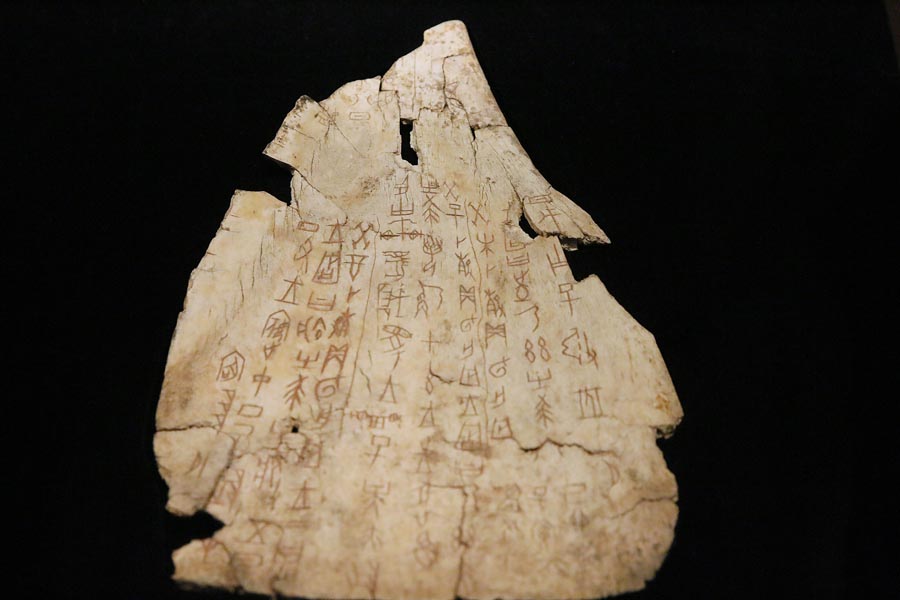
Oracle Bone Script
Introduction
Oracle Bone Script, known as Jiaguwen in Chinese, is the earliest form of Chinese writing that dates back approximately 3,300 years to the Shang Dynasty (c. 16th-11th century BC). This ancient script was primarily inscribed on animal bones and tortoise shells, serving both as a tool for divination and as a record of historical events. Oracle bone inscriptions provide invaluable insights into the early stages of Chinese civilization, including its social structure, cultural practices, and linguistic development.
Historical Context
The Oracle Bone Script is closely associated with the Shang Dynasty, specifically its capital, Yinxu, located in present-day Anyang, Henan Province. Yinxu was the last capital of the Shang Dynasty and is renowned for its archaeological significance, notably for the extensive collection of oracle bones discovered there. These inscriptions represent the earliest known mature form of Chinese characters and are a testament to the advanced level of Shang culture and governance. The Chinese script, which evolved from these early inscriptions, showcases the continuity and adaptation of writing through subsequent dynasties.
Significance and Usage
Oracle bone inscriptions were primarily used for divination purposes. The Shang rulers would pose questions related to weather, agriculture, military campaigns, and other aspects of life to divine the future. The questions were inscribed on bones or shells, which were then subjected to heat until they cracked. The diviners interpreted these cracks to provide answers or guidance. Besides their religious significance, these inscriptions serve as historical records, offering insights into the politics, economy, and daily life of the Shang period. They also provide critical evidence of the early Chinese writing system, contributing significantly to the study of Chinese philology and linguistics.
Cultural and Archaeological Impact
The discovery of the oracle bones significantly shifted perceptions of ancient Chinese history. Prior to their discovery, the Shang Dynasty was primarily known through later historical texts, such as the Shiji, which offered limited and sometimes mythical accounts of this dynasty. The inscriptions on the oracle bones confirmed the existence of the Shang Dynasty as a historical reality, providing tangible evidence of its sophisticated culture and administration. The bones also shed light on the religious practices and beliefs of the time, illustrating the importance of ancestor worship and divination in Shang society.
Modern Appreciation and Revival
In recent years, there has been a resurgence of interest in oracle bone script as part of a broader revival of traditional Chinese culture. Modern artists and designers have drawn inspiration from the pictographic nature of the oracle bone script, incorporating it into contemporary art, fashion, and digital media. This has included the creation of oracle-inspired emojis and fonts, which blend ancient characters with modern aesthetics, making the script accessible and relevant to today's digital audience. The script’s inclusion in the UNESCO Memory of the World Register in 2017 underscores its cultural significance and the ongoing efforts to preserve and promote this ancient form of writing.
Technological Advancements and Research
Advancements in digital technology and artificial intelligence have revolutionized the study of oracle bone inscriptions. High-precision digital scanning and 3D modeling have allowed researchers to examine the carvings in unprecedented detail, while AI technologies assist in deciphering and interpreting the inscriptions. These innovations have accelerated the pace of research and opened up new avenues for understanding the linguistic and historical dimensions of the oracle bones. Collaborative efforts, such as the establishment of digital platforms and international research initiatives, continue to expand the knowledge and appreciation of this ancient script on a global scale.








